Everyone’s Hope
When a human foot finally touched the gray, shadowed surface of the Moon, people watching on television erupted in cheers. It was July 20, 1969—the historic day when Apollo 11 became the first spacecraft to land on a celestial body beyond Earth’s atmosphere. NASA’s ambitious Apollo Program, designed to send humans to the Moon and bring them back safely, had succeeded spectacularly. The achievement required more than 25 billion dollars and the combined knowledge and skill of some 400,000 scientists and engineers.
The astronauts’ space suits also drew great attention. Designed not only to ensure the astronauts’ survival and safety but also to allow them to move comfortably on the Moon, the suits embodied the very peak of twentieth-century science and engineering. They withstood the Moon’s extreme temperature swings of nearly 300 degrees, maintained the internal gas pressure needed for stable breathing, and protected the astronauts from intense solar heat, radiation, and lunar dust. They were also equipped with communication systems and even devices to handle bodily waste.
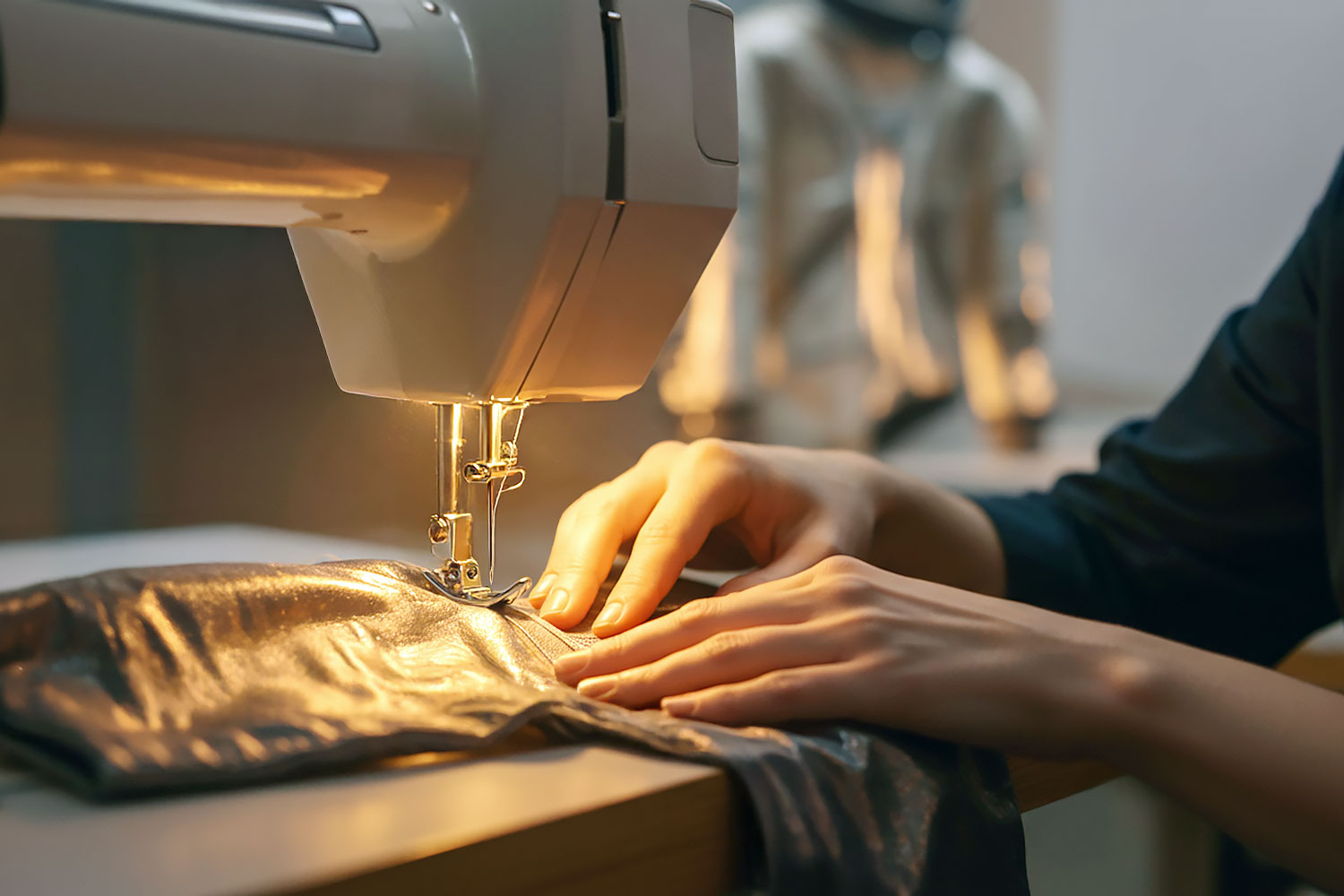
Surprisingly, these suits—often called “the smallest spacecraft on Earth”—were not produced by an advanced military contractor but by seamstresses at a company specializing in baby and women’s underwear. Layering 21 types of functional fabrics and cutting them into 4,000 pieces tailored to the human body, they stitched each one—by hand and machine—with painstaking care. Not even a single pinhole was allowed. Working with intense focus, they felt the weight of responsibility: the astronauts’ lives depended on the precision of their stitches.
The custom-made suits, completed through close collaboration with aerospace engineers, were strong enough to endure the Moon’s extreme environment yet supple enough to let an astronaut pick up a coin from the ground. When the astronauts hopped across the lunar surface in suits they had sewn, the seamstresses said they felt as if they themselves had journeyed to the Moon. Their names were never individually recognized, yet their contributions remain forever woven into the history of space exploration. The Apollo suits became the foundation for every space suit that followed and helped establish spacewear as a vital industry.
Just as achieving the Moon-landing goal required everything from rocket science to the sewing skills of seamstresses, fulfilling the mission of spreading the gospel of the new covenant to all nations also requires collaboration. God has given each of us different gifts—knowledge, eloquence, leadership, wisdom, technical skill, determination—and a tender heart to care for the church and our brothers and sisters. Let us not hold back, thinking our abilities are too small. Instead, let us devote the unique talents God has given us to completing world evangelism.
With united hearts and wholehearted dedication, let us proclaim the news of salvation to the ends of the earth. Let us quickly fulfill God’s earnest desire for all humanity to be saved. After all, God’s deep hope is the hope of us all.


