


Pillows, fishing rods, hats, fountain pens, arrows, golf balls—what do these items have in common? They all make use of one remarkable material. In the early 20th century, this material was so valuable that it rivaled diamonds, and even today, entire industries depend on it. What is it? Feathers.
Found everywhere birds fly, feathers have fascinated people for centuries with their beauty, structure, and astonishing functions. Yet their true brilliance is revealed most fully in nature. Let’s explore the extraordinary world of feathers.
A Kaleidoscope of Plumage
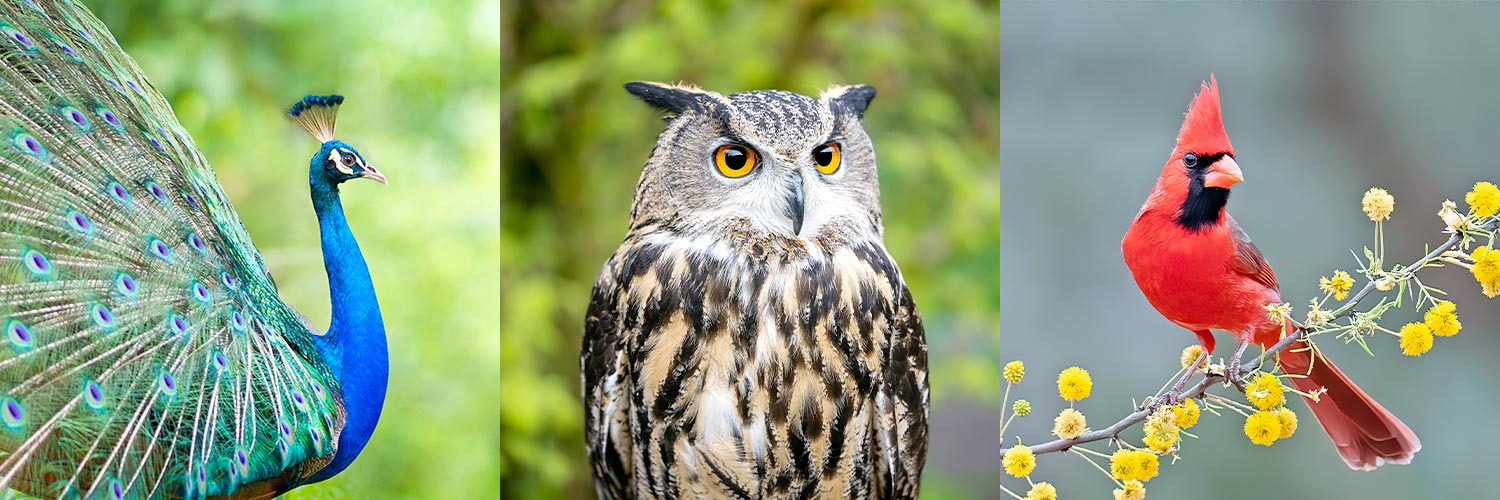
Birds display an astonishing variety of appearances—from the modest gray pigeon to the elegant white swan to the dazzling peacock. Even the tiny hummingbird, only six centimeters long, glows with iridescent colors unique to each species.
Feathers define much of a bird’s identity. Owls have feather tufts that resemble ears. Red-crested cardinals wear a vivid crown. Birds-of-paradise trail ornate feathers deserving of their name.
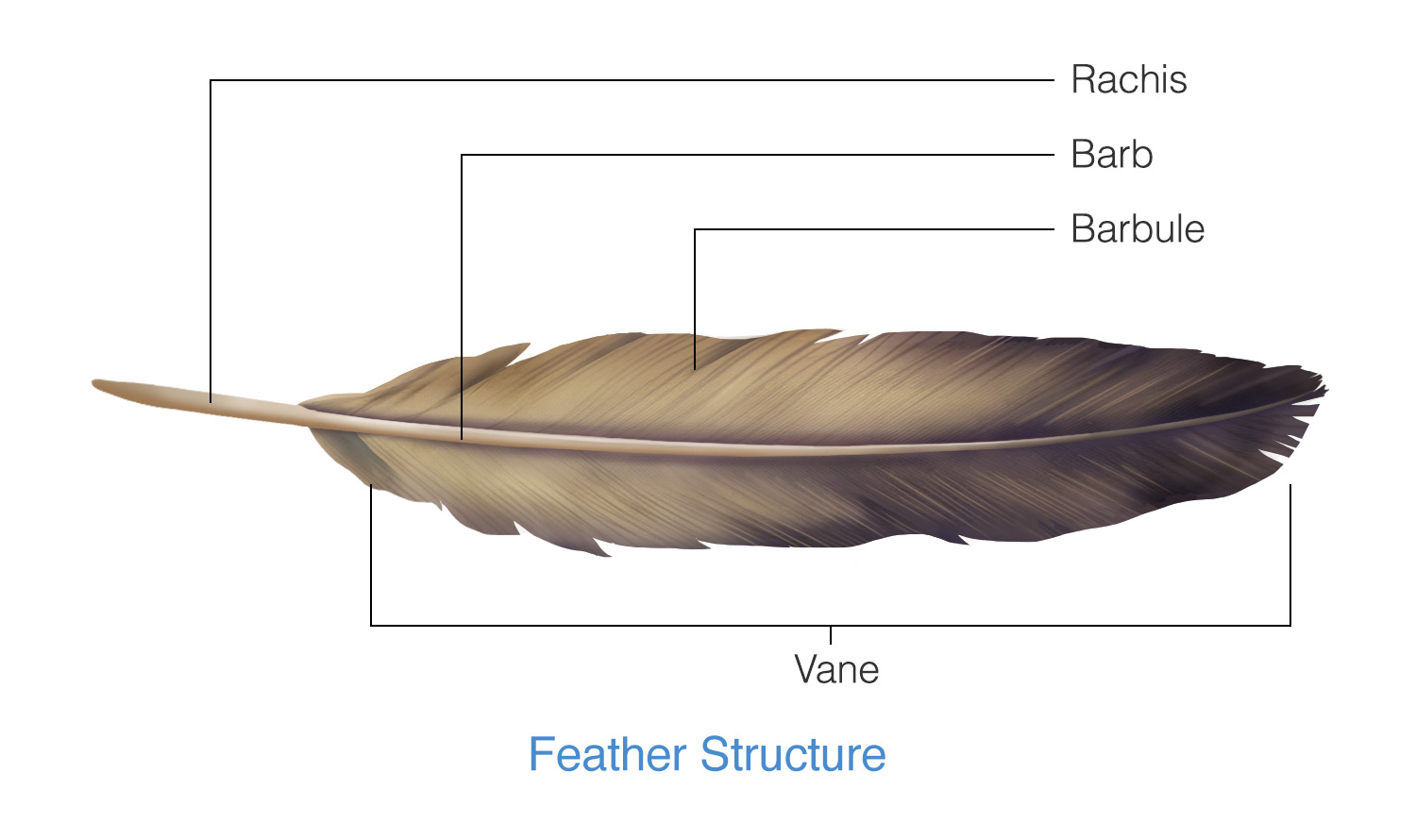
Structurally, a feather consists of a central shaft with vanes extending from each side. Feathers emerge curled from follicles and then unfurl as the barbs spread outward. Composed of keratin—the same protein that forms human hair—feathers are light, flexible, and durable, well-suited for flight or swimming.
Feather colors come from pigments such as carotenoids and melanin, and from microscopic structures that reflect light, creating shimmering iridescence.
Beyond beauty, feathers serve essential functions. If a bird’s plumage is plain, it acts as camouflage. If it is brilliant, it highlights the male to attract females or confuses predators to drive them away. Distinct colors and patterns serve as signals that reflect a bird’s overall health. Feathers also come in several types—contour, down, wing, tail—each designed for a specific role.
Birds care for their feathers daily, grooming each one carefully with beaks and claws. To ward off bacteria and parasites, they sunbathe with wings outstretched and bathe in water or dust. Species like herons even use “powder down”—a fine, talc-like material produced by specialized feathers—to keep their plumage clean and dry.
Despite this meticulous maintenance, feathers eventually wear out. Birds molt at least once a year, replacing old feathers with new ones. Most molt gradually so they can still fly, but some—such as ducks and geese—shed all flight feathers at once and hide until the new set grows in.
Custom Clothing for Climate and Environment
When winter comes, people instinctively reach for thick coats—often filled with goose or duck down. Feathers are incredibly light yet unbelievably warm, making them ideal insulation.
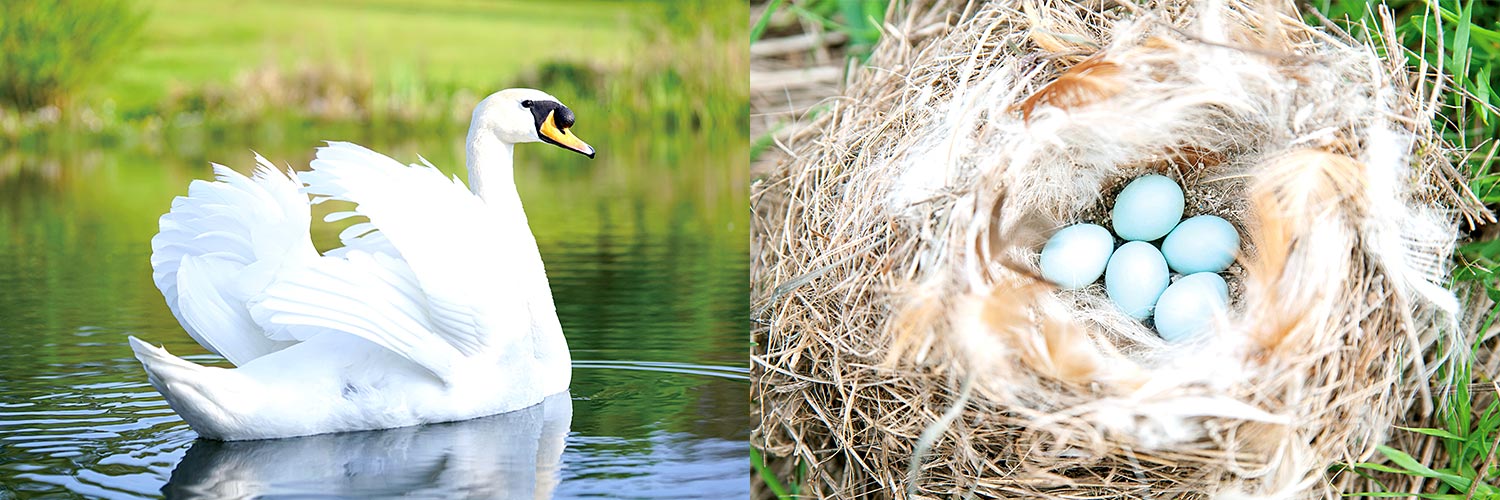
Birds living in frozen climates wear the ultimate natural “down coat.” Most birds have 2,000–4,000 feathers. Swans, however, have around 25,000, with about 20,000 of them being insulating down around the neck. The goldcrest, weighing barely 5 grams, survives harsh Nordic winters because its down traps heat so efficiently. In fact, the temperature difference between the inside and outside of its feathers can reach 78°C.
Feathers also protect fragile eggs and chicks. Many birds line their nests with feathers to regulate warmth. Ducks, geese, and eagle owls even pluck their own down to create soft “feather blankets” that shield their young from cold and parasites.
Birds maintain high body temperatures due to rapid metabolism and constant movement. But do feathers make them overheat in warm climates? Not at all. Feathers actually keep birds cool by blocking direct sunlight and slowing heat transfer. Dark feathers absorb heat and re-radiate it before it reaches the skin. Birds also regulate temperature by fluffing their feathers for ventilation or releasing heat through their legs and beaks.
Feathers are also naturally water-repellent. Their interlocking barbs and layered arrangement cause water to bead up and roll off. Aquatic birds often have more feathers than land birds and spread oil from their preen gland to enhance waterproofing.
Surprisingly, some birds benefit from absorbing water. Sandgrouse use spiral breast feathers like sponges, soaking up water at ponds and carrying it back to the nest—not only to cool their eggs but also to provide moisture for their chicks. Cormorants deliberately soak their flight feathers to reduce buoyancy, making diving easier.
Advanced Flight Suit
Since ancient times, humans have longed to fly and have watched birds with admiration. Leonardo da Vinci and other early scientists studied bird wings as they searched for ways to take to the skies.
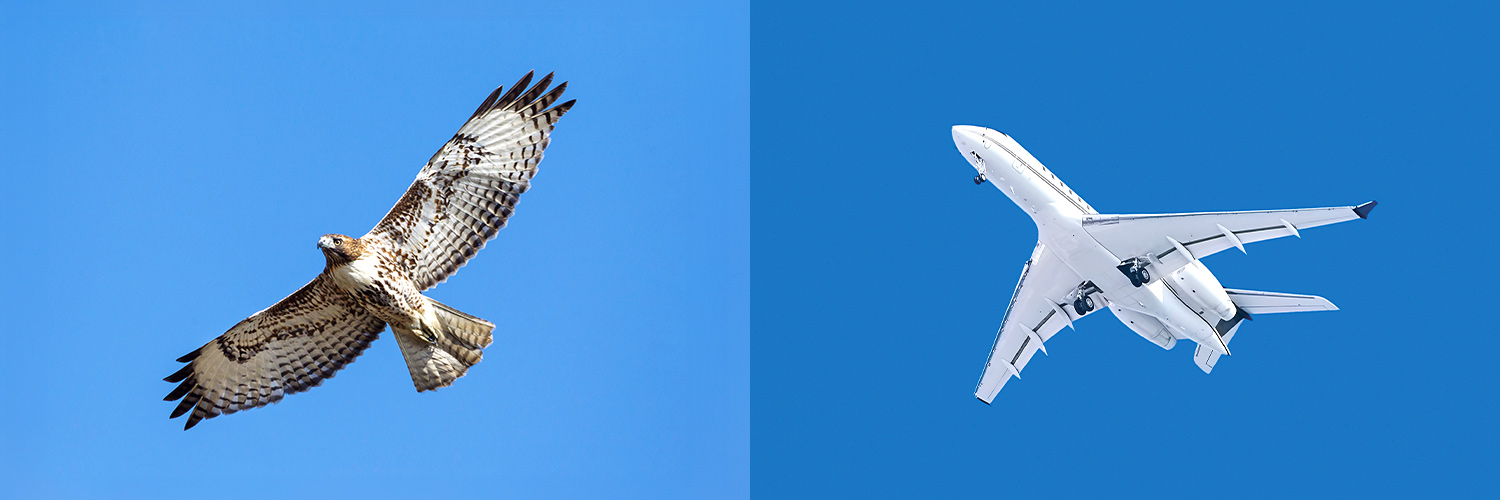
While airplanes eventually succeeded, birds still surpass us in elegance and efficiency. Birds instinctively adjust for temperature, air pressure, and wind—conditions that challenge even expert pilots. Their flight is precise, flexible, and remarkably fuel-efficient, which is why engineers continue to study birds for aerodynamic insight.
Feathers are central to this mastery. The wings and tail are largely made of feathers, which keeps them extremely light. Each feather can move independently, functioning like a tiny control surface. At the base of every feather are hairlike filoplumes that detect even slight movements, allowing birds to sense changes in airflow, lift, and drag. With this information, birds make fine, precise adjustments to their feathers, enabling them to change direction and speed with remarkable smoothness.
Airplanes are loud—and birds also experience noise from wind. Many birds fly at about 40 km/h (11 mph), exposed to around 100 decibels, similar to a passing train. To protect their hearing, they have specialized feathers that cover their ear openings. The rough texture of feathers also reduces drag and softens noise. Owls are exceptionally quiet in flight because their wing feathers have soft, fringed edges that muffle sound. As a tradeoff for this silent flight, however, owls fly at relatively low speeds—around 20 km/h (5.5 mph).
Feathers combine strength and lightness. Their shafts and barbs are reinforced with fibers that resist breaking and absorb shock. Consider the falcon, diving at over 480 km/h (230 mph), often from 900 meters (approx. 3,000 ft) high, executing tight turns that exert up to 27 G1 of force. Supersonic jets endure around 9 G—yet falcons withstand this thanks to tightly interlocked, melanin-strengthened feathers.
1. G: G-force, referring to gravitational acceleration or the resulting force experienced by an object.
Melanin, in addition to causing dark coloration, reinforces feathers structurally—one reason many birds like seagulls have dark wingtips where strength matters most.
Wings symbolize freedom, but they also symbolize comfort. For nestlings that have never seen the world beyond their nest, nothing is safer than the shelter of their mother’s warm wings.
All of this—the soaring freedom and the tender embrace—is possible because of feathers. These marvels of natural engineering are incredibly light yet resilient enough to withstand wind, rain, heat, cold, and gravity. It is no exaggeration to say that feathers are among the greatest gifts nature has ever crafted.