


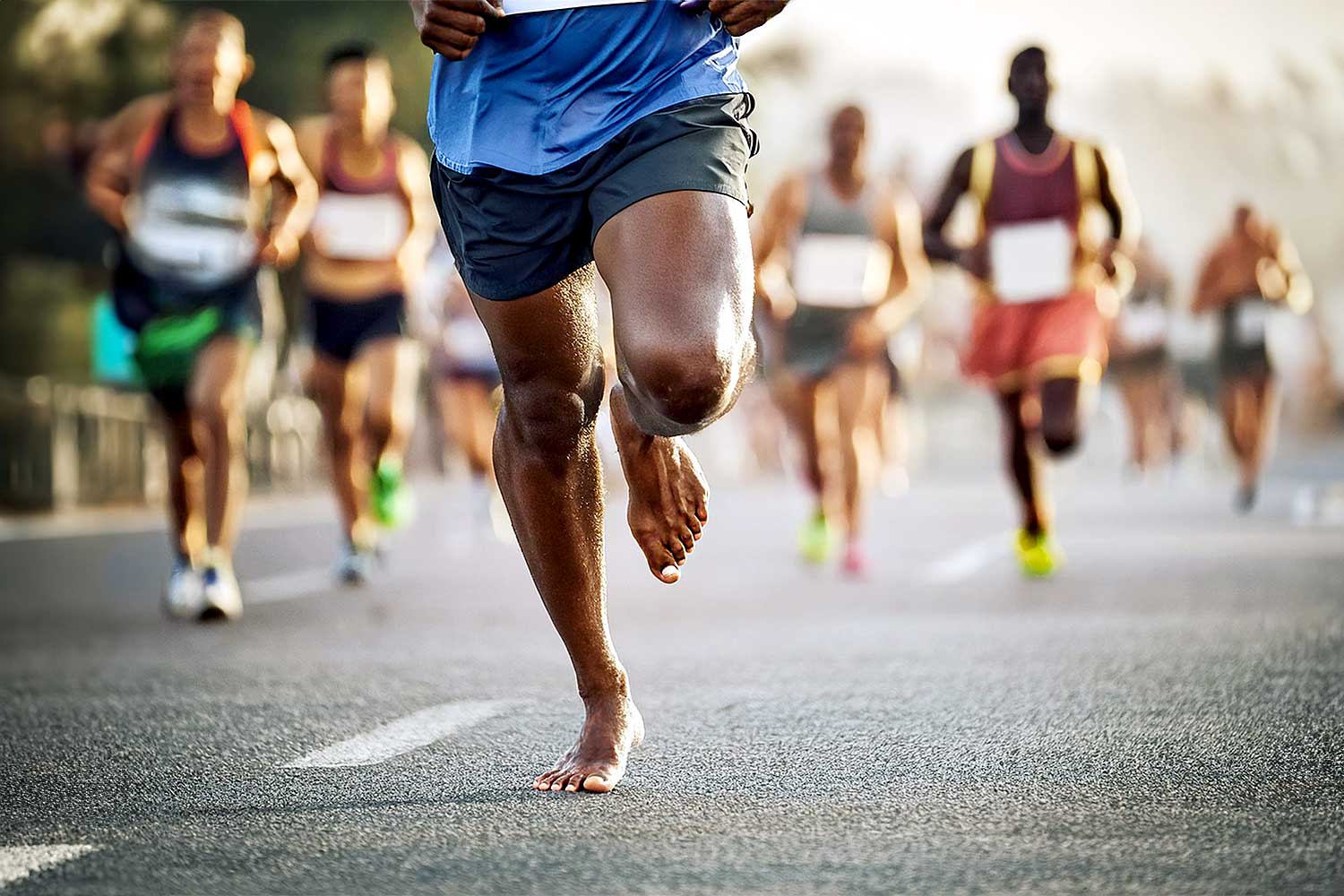
The star of the 1960 Rome Olympics was Abebe Bikila, the marathon runner from Ethiopia. He became the first black athlete from Africa to win a gold medal, setting a new world record in the process. Most notably, he accomplished it all barefoot.
Bikila had entered the race at the last minute, replacing an injured teammate, and did not have time to be fitted for proper running shoes. Choosing to run without uncomfortable, ill-fitting footwear, he made history as the legendary “barefoot runner.” But how could he endure a marathon on rough asphalt and cobblestone roads without shoes, padding, or support?
Foot: Silent, Sophisticated Structures
Often hidden beneath socks and shoes, our feet may not receive much attention—but structurally, they rival the hands in complexity.
Each foot contains 26 of the body’s 206 bones, nearly ten percent, connected by 30 joints that enable fluid and varied movement. (For comparison, the hand contains 27 bones and 25 joints.) Feet are also densely packed with peripheral nerves. With training, they can perform surprisingly delicate tasks. The soles, rich in sensory receptors, send instant feedback to the brain, helping us maintain balance and adjust posture with every step.
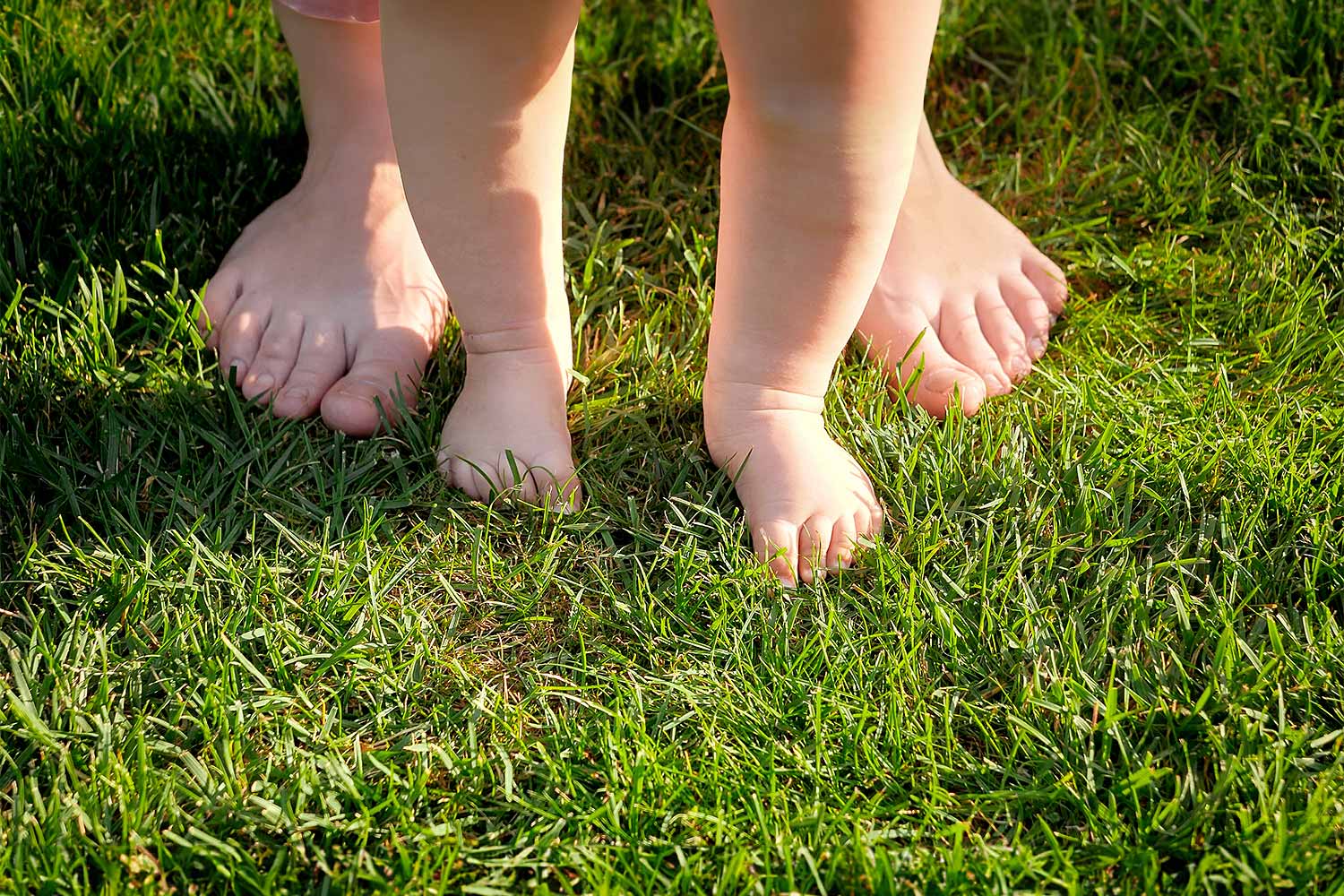
The heel bone (calcaneus)—the largest bone in the foot—is usually the first point of contact with the ground, absorbing impact and stabilizing balance. Each big toe has two bones, and the other toes have three, allowing them to act as flexible levers that shift weight and push the body forward.
These bones are tightly bound by 107 ligaments, each like a strong strip of reinforcement tape. They are remarkably durable—capable of supporting up to 100 kilograms (220 lbs) of pressure even when simply standing—and help preserve the foot’s structure. Tendons, which link muscles to bones, transmit muscular force into movement. The Achilles tendon, extending from calf to heel, is the body’s thickest and strongest tendon. Far larger than that of other primates, it functions like a coiled spring—stretching, recoiling, absorbing shock, and propelling us forward with each stride.
With every step, the feet endure forces three to seven times body weight. Over a lifetime, we walk more than 160,000 kilometers (99,420 miles)—about three and a half trips around the Earth—and flex our feet nearly 300 million times. The approximately 20 muscles from ankle to toe withstand immense daily strain—up to a thousand tons total—yet operate with remarkable resilience.
Hundreds of blood vessels run throughout the foot, delivering oxygen and nutrients to its farthest tissues. Even though the feet are the body’s most distant point from the heart, their skin and temperature remain well-regulated thanks to this dense vascular network. Acting like pumps from below, the feet also help return blood to the heart—earning them the nickname “the second heart.”
The Arch of the Foot: The Most Perfect Structure
What sets humans apart from other animals—and even from more than 220 other primate species—is our ability to walk upright on two feet. This unique adaptation freed our hands for creating, building, and shaping civilization as we know it.
But walking upright is no simple task. Our entire body must balance on relatively small supports: our feet. Though they make up only about two percent of our body’s surface area, they carry the remaining ninety-eight percent—absorbing the force of every step and stride. Abebe Bikila’s barefoot Olympic marathon remains a powerful testament that the human foot, even without shoes, is engineered to run.
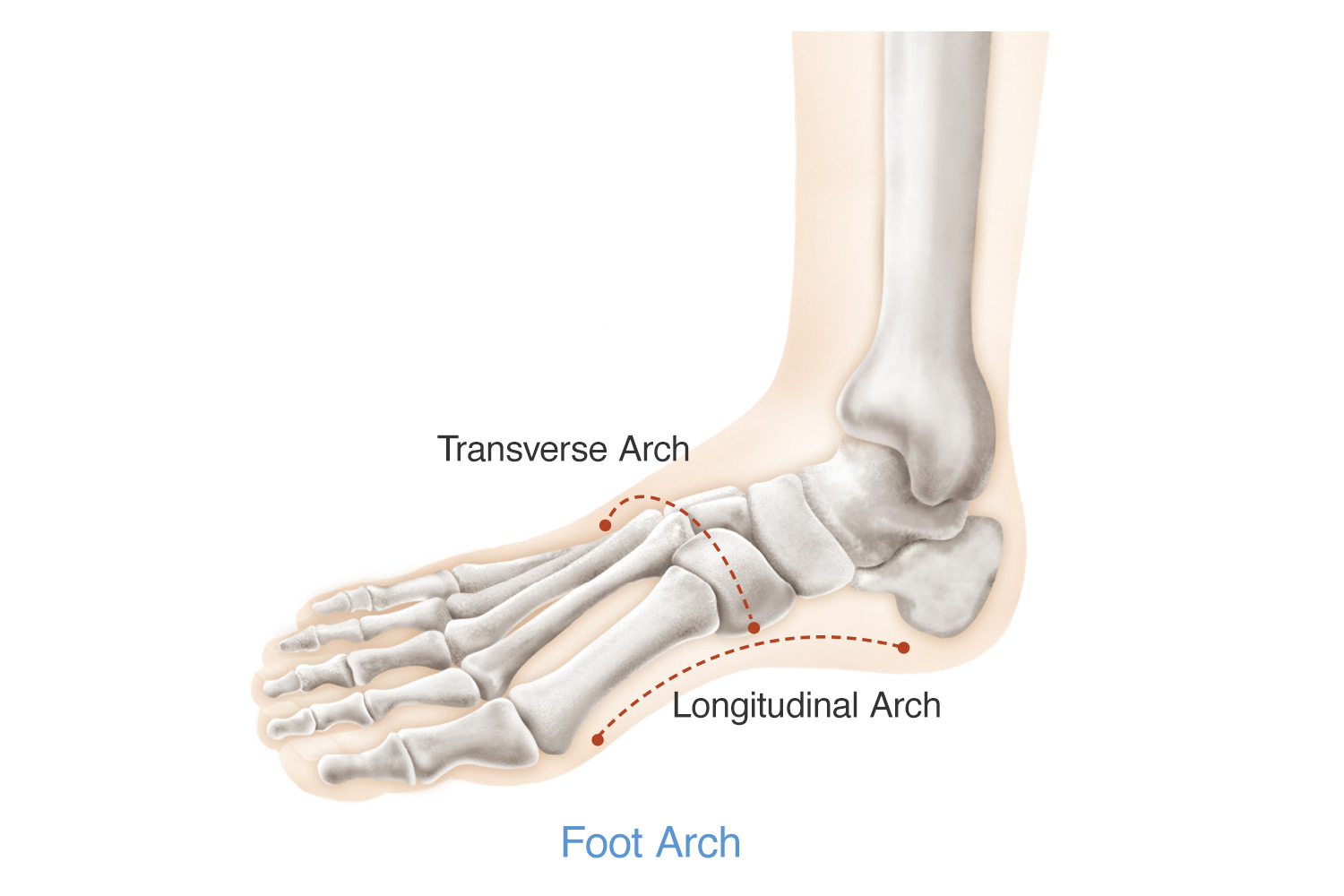
At the heart of this engineering lies the arch. Just as arches in bridges and cathedrals distribute weight efficiently and provide structural strength, the arches of the foot create both stability and elasticity. Viewed from the side, the midfoot curves upward; and this arch runs not only lengthwise from heel to toe but also transversely across the foot.
When the foot strikes the ground, the arches flatten slightly to absorb impact. Then, like springs, they rebound to help propel the body forward. They keep the foot from collapsing under pressure. At the top of this structure is the talus, functioning like the keystone of an architectural arch—it distributes forces evenly and maintains balance throughout the foot.
Beneath the arch lies the plantar fascia, a thick band of fibrous tissue unique in its strength compared with other primates. Running from the heel bone to the forefoot, it acts like a stretched rubber band, helping the arch return to its original shape after each step. It also reduces strain on the heel, absorbs shock to protect the ankle and knee joints, and assists in lifting the foot during movement.
Because the arch operates through such delicate balance, changes in its shape can affect the entire body. In flat feet, where the arch collapses, the foot tires easily during long walks, and the heel often tilts outward, increasing the risk of ankle sprains. In high arches, the foot cannot distribute impact properly; pressure concentrates on the ball of the foot, causing pain, calluses, and even knee or hip discomfort. For this reason, some have called the human arch “the most perfect structure in the universe.”

Leonardo da Vinci described the foot as “a masterpiece of engineering and a work of art.” Yet throughout history—when anatomy was poorly understood—the foot was often regarded as the least attractive and most overlooked part of the body. Only with modern medical insight has its true significance been appreciated: the foot is the foundation of physical health.
A thrilling soccer goal that decides a match, or the graceful glide of a ballerina as light as a flower petal—all begin at the tip of the foot. But even without such dramatic moments, our feet are with us from the very start of each day—from the moment we rise from bed, prepare to go out, and take our first steps into the world.
Today, countless people walk upon what may well be “the most perfect masterpiece in the universe.” From the lowest place, our feet support every moment of our lives, bearing the weight of our days with silent faithfulness.