The Dream of All Mankind: Exploring the Universe
August Kruesi (Aerospace Engineer)


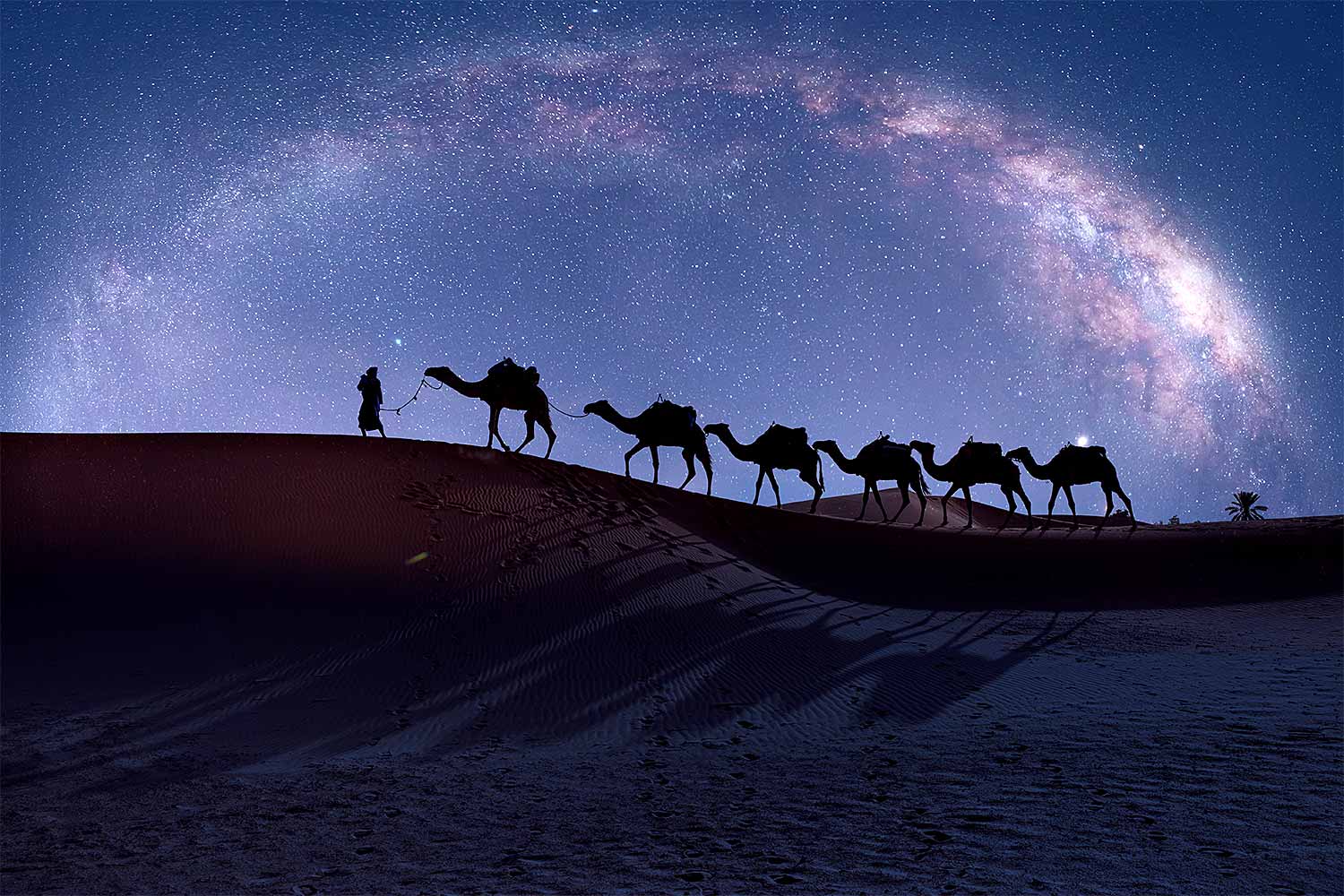
Ancient humanity, regardless of language, culture, or where they lived on the earth, was fascinated by the night sky. Powerful beliefs were attached to the heavenly bodies, placing them in the realm of the supernatural. Around the world, the sun, moon, planets, stars, and constellations were carefully observed. Often, these celestial bodies were believed to be gods or to be guided by gods. The Mayans were so precise in their observations that their 260-day and 365-day calendar cycles match the tropical solar year with an error of only about 19 minutes. Across civilizations, dwellings, pyramids, temples, and entire cities were aligned with the stars.
Despite the importance placed on the visible lights in the sky, ancient peoples had no understanding of the true scale and magnificence of the universe. They could distinguish five objects that appeared brighter and moved differently from the twinkling stars, yet they could not grasp how vast the differences in distance were. The stars and planets lay beyond their reach, and they could never have imagined that the light from the stars might have taken millions of years to reach the earth.
Humanity Begins to Dream Beyond Earth
The ancient Greek astronomer Aristarchus of Samos (c. 270 BC), understanding the concept of parallax, apparently believed the stars were extremely far away1. However, it was not until the early 20th century that attempts to calculate the size of the universe began using a new and astonishingly large unit of distance: the light-year. In 1920, the American astronomer Harlow Shapley proposed that the Milky Way Galaxy was 300,000 light-years across. Although his estimate was roughly three times too large, the colossal scale of the universe was finally beginning to come into view.
1. https://en.wikipedia.org/wiki/Heliocentrism
The latent desire of humankind to explore our solar system was awakened in millions through the imagination of the science-fiction author Jules Verne2. In his 1865 novel From the Earth to the Moon: A Direct Route in 97 Hours, 20 Minutes, Verne described a plan to launch three men to the Moon using an enormous space cannon called the Columbiad. A few years later, he published a sequel, Around the Moon. In 1889, Verne released a second sequel, The Purchase of the North Pole, in which members of the Baltimore Gun Club scheme to use the same giant cannon to alter the tilt of the Earth—an audacious attempt intended to open the Arctic’s mineral resources for exploitation. As society envisioned that advancing technology would someday propel people to the Moon, the dream of reshaping the Earth itself also began to emerge. Fiction soon combined with the new medium of motion pictures. In 1902, Georges Méliès’s A Trip to the Moon, the first science-fiction film in history, further fueled humanity’s imagination and sense of possibility.
2. https://en.wikipedia.org/wiki/From_the_Earth_to_the_Moon
The invention of rocketry dates back more than 1,000 years, first appearing in China as the propulsion system for “fire arrows.” From there, it spread over the centuries to Korea, India, Eurasia, and Europe. As aviation science advanced rapidly after World War I, so too did rocketry. In 1920, American scientist Robert Goddard published A Method of Reaching Extreme Altitudes, and soon after, the Smithsonian Astrophysical Observatory—which funded his work—issued a press release highlighting Goddard’s proposal to build a rocket capable of reaching the Moon. In 1926, Goddard became the first to launch a liquid-propellant rocket3.
The Beginning of Space Exploration
Scientists in Germany and Russia soon began their own efforts to develop high-performance liquid-fuel rockets. Tragically, it was the desperation and brutality of war that accelerated rocket technology. During World War II, Nazi Germany developed the V-2 rocket, the direct forerunner of modern space-launch vehicles. Many of the scientists involved in that program later became central figures in both the Russian and American space programs during the Cold War “Space Race”—a contest driven as much by national and ideological rivalry as by scientific progress. The Soviet Union achieved the first milestone by sending Yuri Gagarin into orbit around the Earth in 19614, and the United States achieved the next historic breakthrough by landing astronaut Neil Armstrong on the Moon in 1969.

One of the most important photographs ever taken was captured by Apollo 8 astronaut Bill Anders in December 1968. Known as “Earthrise,” it showed our planet as a delicate blue sphere suspended in the black emptiness of space, rising above the stark, colorless surface of the Moon. Andrew Chaikin, writing in Smithsonian Magazine, expressed the photograph’s profound impact on humanity:
“It’s arguably the most iconic photograph of the 20th century: The Earth rising above the Moon’s bleached and desolate horizon, a breathtaking jewel of color and life more than 230,000 miles away. . . . In the following weeks, on newspaper front pages and magazine covers around the world, we suddenly saw ourselves as inhabitants of a lovely and seemingly tranquil planet afloat in the endless void of space.”5
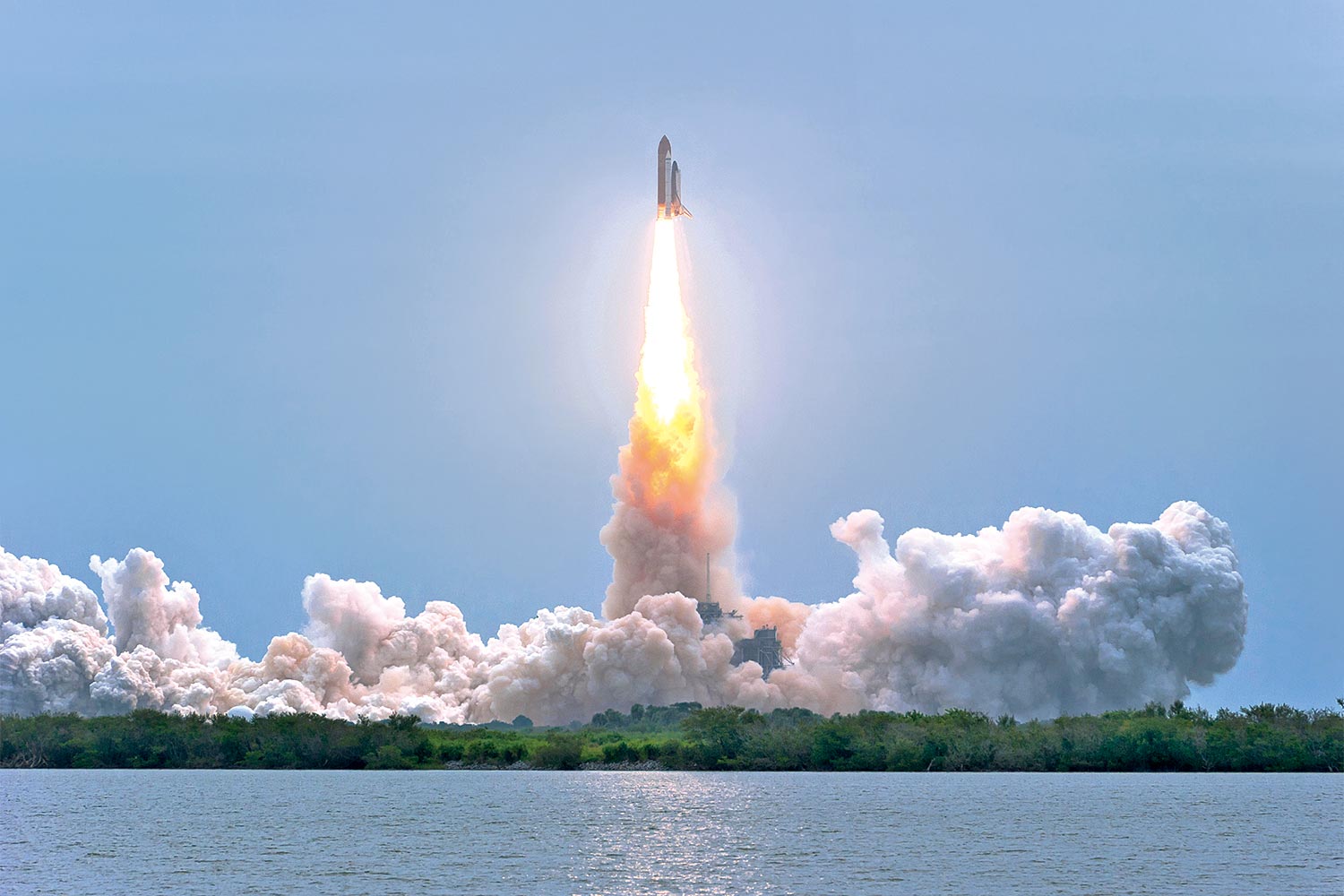
These achievements captured the attention of the entire world, yet humanity’s aspirations continued to grow. In 1981, the Space Shuttle demonstrated the feasibility of reusable spacecraft, and the Mir space station (1996) and the International Space Station (2000) enabled astronauts—both men and women—to live and work in space for months at a time. In the 1990s, the world saw the birth of space tourism. Dennis Tito is widely recognized as the first space tourist, paying $20 million in 2001 to spend seven days aboard the ISS. Since then, hundreds of individuals wealthy enough to afford the cost have placed deposits for future trips, eager to experience weightlessness and gaze in awe at Earth from the edge of space.
A New Dream: Terraforming Mars
Today, global attention has shifted dramatically toward Mars. Humanity’s dream has expanded into ambitious plans to colonize the Red Planet and to invest vast resources into terraforming—altering Mars to make it more Earth-like and potentially habitable. Acknowledging the planet’s harsh environment, some scientists have even begun discussing the possibility of genetically modifying humans to help future colonists adapt to Martian conditions. Mars is now viewed as a stepping-stone to exploring the outer solar system and, eventually, distant star systems. The dream of colonizing space is no longer just a scientific pursuit—it has become a quest to transcend the limitations of Earth and even the human body itself. Underlying this dream is an anxious reality: concerns that Earth may no longer be able to sustain its 8 billion people. For some, the colonization of Mars is becoming not just an adventure but an urgent necessity to safeguard the long-term survival of the human race.
Let’s imagine life in a human colony on Mars through the eyes of a young girl—the first child ever born there. Her mother loved the color green, so she named her daughter Emerald, or Emmy for short. Her dream was that Emmy would grow up watching her scientist parents transform the barren red planet into a world filled with life.
Now, at ten years old in Earth years, Emmy writes a message to her best friend on Earth, Esmeralda.
Emmy’s Letter
“Hi Ezmy!!!!! It’s me, Emmy!!!!
I couldn’t write to you for a long time. Dad finally said I could send one message, but no pictures. I miss you so much. I didn’t want to worry you, but at the last Ho-Man, only one supply ship landed. Mom told me that the time before that, we got six ships. I’m not allowed to go outside anymore. Mom says every time I go out, we lose a little oxygen. Ezmy, I’m so sad I can’t see you. I want to see you on the computer again and talk to you. Ezmy, you are so rich! You have so much water!!! I really, really want to come to Earth and swim like you can. It looks so wonderful. Dad says there is no heaven, but I think you live in heaven. Dad says I can’t come live with you because there is no ship coming back. And . . . something is wrong with my muscles and my bones. Dad says the trip would hurt me. My eyes hurt a lot too. My adjusting glasses broke, and nobody here can fix them. I think about you all the time. I look at your pictures every day. It makes me smile when I see you eating a mango. It looks so delicious. It’s so big and soooo JUICY AND ORANGY. I think mango is a happy fruit. It makes you look so beautiful. Your skin is so beautiful. Every day I beg Dad to let me go to Earth and stay with you. You have so many plants and so much water, and you can go outside without a dome whenever you want. Sometimes I cry because I want to go to Earth so much. Ezmy, Mom is crying a lot now too. When she cries I tell her not to cry, because it’s hard to collect the tears. We have almost no water. So we save every drop—even our tears. Ezmy, I only wanted to send happy news. But . . . we need help. We’re running out of food. I’m hungry all the time. There was a leak and a lot of our plants froze. Ezmy, I miss you so much. I love you, Ezmy. I hope there is a heaven, because when I die, I want to go there with you. I want to eat mangoes with you every day in heaven. Mom says I have to stop now because I’m crying again.
Goodbye, Ezmy.
Your Emmy.”
We can only launch missions to Mars every 26 months or so, when Earth and Mars align for a Hohmann transfer—the least-energy path between planets. The journey itself takes about seven months. Landing on Mars is so dangerous that engineers call it “the seven minutes of terror,” because so much can go fatally wrong6. Radio signals take between 3 and 22 minutes to travel between Earth and Mars. When Mariner 9 reached Mars, the entire planet was buried beneath a global dust storm for weeks, delaying imaging for months. The atmosphere is just 0.6% of Earth’s and consists mostly of carbon dioxide. Daytime summer temperatures may reach 20°C, but plunge to –73°C the same night. And without a protective magnetic field or thick atmosphere, astronauts are bombarded with intense radiation that damages DNA, suppresses immunity, and disrupts the cardiovascular system. Experiments have shown that mice exposed to galactic cosmic radiation develop long-term cognitive and behavioral impairments7.
6. https://www.bbc.com/news/av/science-environment-53491523
7. https://www.ncbi.nlm.nih.gov/pmc/articles/PMC5666814/
Though Dreams and Reality Differ, the Challenge Continues
Why do humans seek to flee Earth, to conquer distant planets, and even reshape them—depending entirely on their own strength? The truth is sobering: If we tried to live on Mars, we would become desperately anxious prisoners in an alien environment, far more confined than we ever were on Earth. In attempting to create a new world, we would only end up ruining the one we already have. And the tremendous resources needed for space colonization would be brutally extracted from Earth itself. To what end? Now is the time for humanity to awaken and seek God, the Almighty Creator of the universe.

Our dream to escape Earth and explore space has been tragically misdirected. The Kingdom of Heaven is not a fantasy—it is the true home of humanity. We cannot see it because it exists in higher dimensions, and even modern science acknowledges the existence of a never-ending unseen universe. Everything we long for is already prepared—life, joy, beauty, eternity. God’s gift is not temporary life in fragile biological bodies. It is eternal life in an angelic body, free from suffering, mourning, pain, and death. Heaven is true freedom.
God’s love fills Heaven and fills the emptiness in our souls if we open our hearts. Aren’t we yearning for this? We are now living in the last days of the Earth. The dream of escaping destruction by fleeing to Mars is a sad and futile illusion. Would we be like Emmy’s parents? Could we look at our child’s pale, weakened body—look into her tear-filled eyes—and not be pierced to the heart? Let us humble ourselves before God, obey His commands, and fill our hearts with gratitude. Obedience is the doorway to an eternal, glorious future. Let us come to know God—not the God of human imagination, but the true God revealed through the Bible: God our Father and God our Mother. They descended into this three-dimensional universe, to this tiny speck called Earth, to save our souls from death. They are the Spirit—Christ Ahnsahnghong—and the Bride, Jerusalem Mother. Now is the time—the only time left—to abandon false dreams, cast aside empty human traditions, and run to Them.
“People who say such things show that they are looking for a country of their own. If they had been thinking of the country they had left, they would have had opportunity to return. Instead, they were longing for a better country—a heavenly one. Therefore God is not ashamed to be called their God, for he has prepared a city for them.” Heb 1: 14–16