The Fragrance of Life to the Whole World
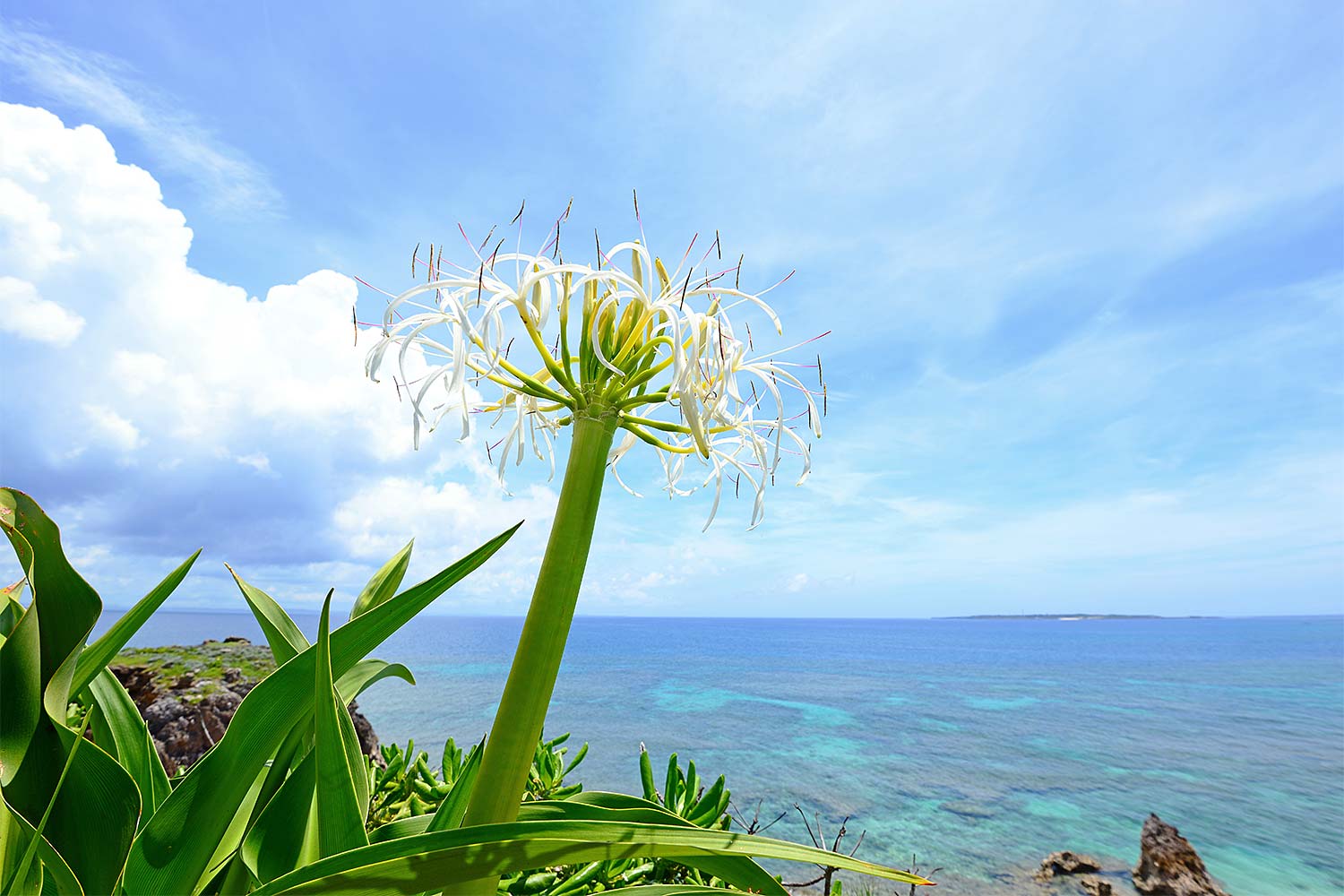
Once they take root, plants remain in the same place for life. To spread their seeds, they use various methods—some are carried by the wind, others through animals’ droppings. But the Crinum asiaticum (commonly called the spider lily), a perennial plant of the amaryllis family, uses a far bolder method.
In Korea, the only natural habitat of the spider lily is Tokki Island, near Seongsan Ilchulbong on Jeju Island. How could this plant, believed to have originated from the southern seas, have taken root on such a small island, filling the air with its delicate fragrance?
Spider lilies typically grow along coastlines and bloom from July to September. Each flower stalk bears around twenty long, slender white blossoms. After the flowers wither, round, grape-like seed pods form in their place. These pods grow so heavy that the stalk can no longer support them. When the stalk bends and breaks under the weight, the ripe fruits fall onto the sand, roll down the slope, and drop into the sea. The buoyant fruits float on the waves, drifting across the waters until they reach new shores. That is how spider lilies have spread not only throughout East and tropical Asia but as far as the United States and Mexico.
Two thousand years ago, the apostles of the early Church, too, did not remain in one place but scattered far and wide to fulfill Jesus’ prophecy: “This gospel of the kingdom will be preached in the whole world” (Mt 24:14). Among them, Apostle Paul established many churches across Asia and Europe through his three missionary journeys. Even when shipwrecked on an island while being taken to Rome, he continued to preach the gospel. Neither imprisonment, hunger, thirst, cold, nor hardship could stop him—for Paul, spreading the gospel was a mission he could never abandon.
Today, in the Age of the Holy Spirit, the protagonists of the New Acts are flying swiftly to nations and cities that have yet to receive God’s truth, spreading the deep fragrance of life. The harvest of the gospel is flourishing abundantly across the world. And the more patience it takes to bear fruit, the greater the joy of reaping. How much more glorious will the heavenly reward be!


