


A canopy of branches shades the forest, where the breeze carries refreshing energy and the soft rustle of wildlife gently stirs the quiet. This calm, green world often becomes a canvas for vivid imagination. It is no surprise that so many fairy tales—Snow White, Hansel and Gretel, Little Red Riding Hood—begin their stories in the woods.
Yet even without imagination, the forest holds countless fascinating tales of its own. Every plant and animal depends on one another, each life woven with unique meaning. Among them, the trees—unquestioned pillars of the ecosystem—tell stories we can never overlook.
The Harmony of Trees in the Forest
It takes hundreds of years for a dense, natural forest to form. Seeds carried by the wind settle on empty land and slowly blanket it in green. “Pioneer trees” such as pines—sun-loving and resilient—begin to take root one by one. Over time, shade-tolerant trees like oaks and hornbeams join them, and through this long and patient process, a thick, living forest emerges.
Though we cannot see or hear it, the trees within a forest are constantly communicating. One of their common methods is scent. When leaves are attacked by animals, they release defensive chemicals such as ethylene. Neighboring trees detect the scent carried by the wind, recognize the threat, and respond—producing toxins or sticky sap to deter insects, or emitting chemicals that attract predators of the pests. This natural warning system is so effective that trees near those previously attacked often become healthier and more resilient than trees farther away.
However, scents weaken as they spread and may not travel reliably depending on the weather. Thankfully, trees possess an even more dependable communication network: their roots. A tree’s roots can stretch to twice the width of its canopy1, anchoring it firmly while connecting it to many others underground. Through this vast network, trees exchange chemical and electrical signals, as well as nutrients. They warn each other when predators approach and even share sustenance with neighbors that are struggling.
1. Tree Canopy: The upper part of a tree, consisting of many branches and leaves.
Fungi in the soil play a crucial role in sustaining this underground network. Unable to photosynthesize, fungi rely on organic matter and the nutrients of surrounding organisms. They settle on a tree’s roots and spread outward until they reach the roots of other trees, where they interact with the fungi living there. This intricate web of mycelium2 can stretch meters—or even kilometers—from just a spoonful of soil. Because of this remarkably fine mesh, even trees that stand alone remain connected.
2. Mycelium: Thread-like cells that make up the main body of a fungus.
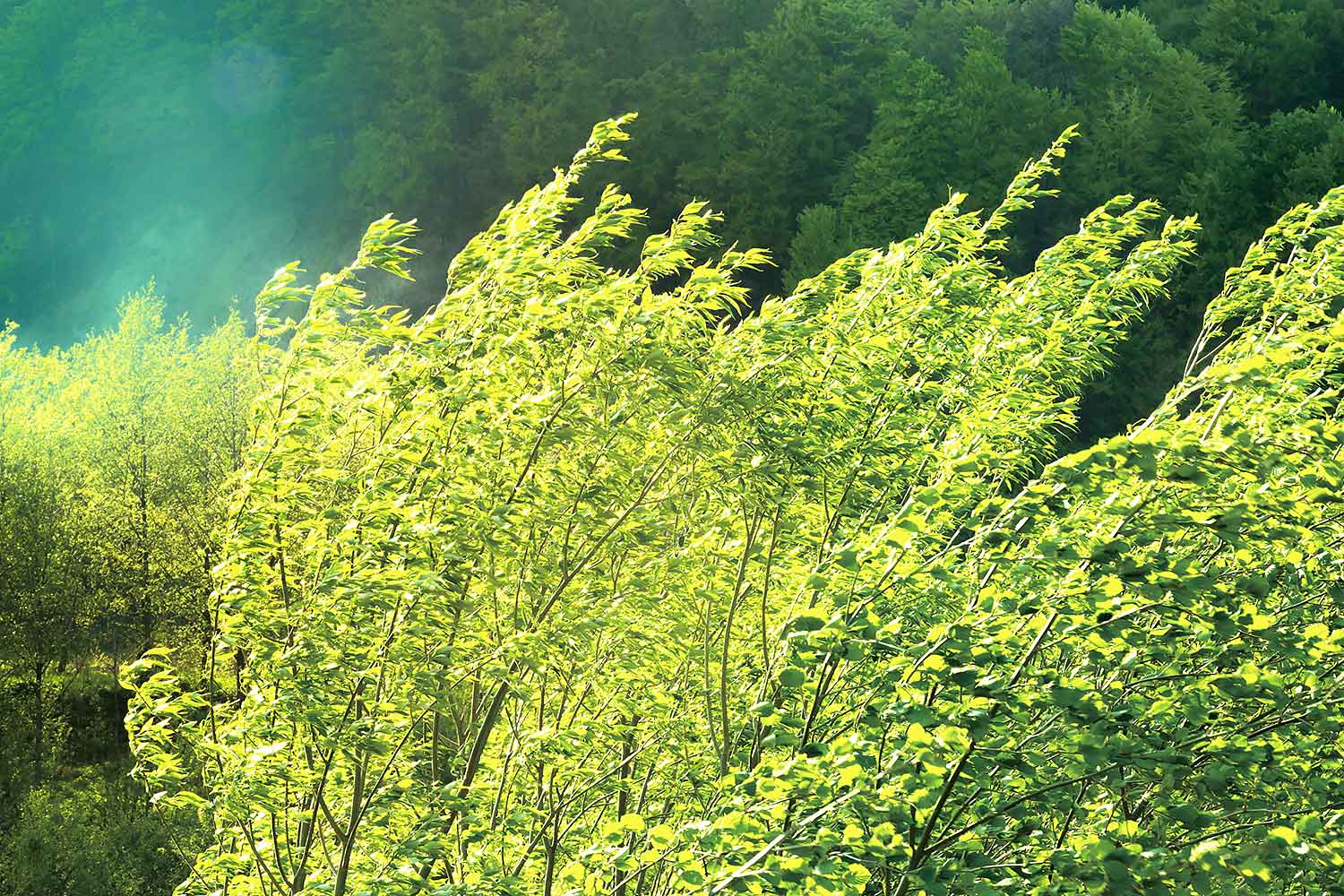
Trees also depend on one another when facing major crises like storms. When powerful winds bend their branches, the canopy of neighboring trees acts as a buffer, preventing them from breaking or toppling easily. But when a single tree falls and creates an opening, wind can surge in, threatening the stability of the entire forest ecosystem. It is as if the trees understand this, standing together to protect the vibrant green world they share.
The Forest, Cradle of Life
Trees living together in harmony enrich the forest in countless ways. They soften harsh sunlight and strong winds, creating a gentler, more stable forest climate. They also help water circulate efficiently, maintaining consistent humidity throughout the year.
A full-grown tree releases between 100 and 700 liters of moisture into the air and soil surface each day. When it rains, a single tree can absorb more than 1,000 liters of water and channel it deep into the ground. There, the water is naturally purified into clean, oxygen-rich groundwater. The total amount of water stored annually in Korean forests is approximately equivalent to half the volume of Lake Mead, the reservoir behind Hoover Dam in the United States—a fact that has earned forests the nickname “green dams.” Thanks to these green dams, plants and animals are protected from floods, landslides, and droughts.
Trees, nature’s humidifiers, also act as powerful air purifiers. A single tree can filter more than 100 kilograms (approx. 220 lbs) of dust carried down by rainfall. Through photosynthesis, it absorbs and stores up to 20 metric tons of carbon dioxide over its lifetime. Even after it dies, a tree continues to give back—its stored carbon becomes part of the humus that enriches the soil. In this way, trees maintain a clean and fertile forest environment, both in life and beyond life.
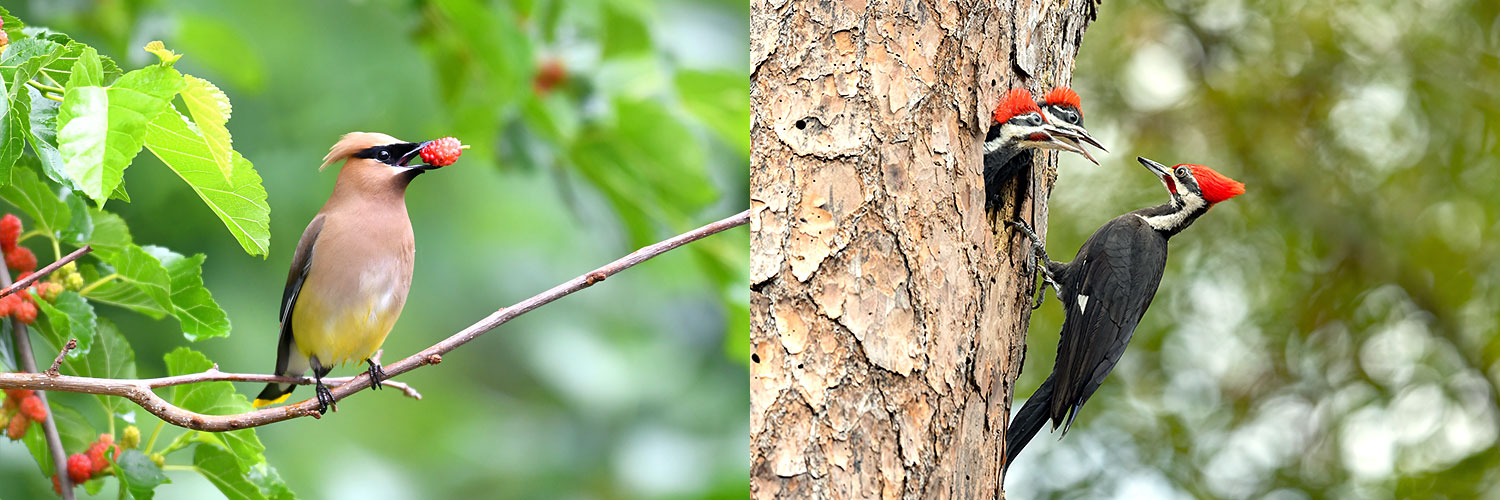
Trees also provide shelter for countless forest creatures. One large tree can support hundreds of insect species and thousands of individual insects. Its sturdy trunk, resistant to heat and cold, becomes a safe home for woodpeckers, owls, and bats. Shrubs like azaleas, which branch out from their base, offer protection and nesting spaces for small birds.
As trees grow—producing leaves, blossoms, and fruit in their seasons—they also provide nourishment for countless animals. Young insects feed on tender leaves, later turning to nectar or sap. Ripe fruits become meals for birds, while fallen ones sustain wild boars, deer, and other animals as they prepare for winter. After autumn’s harvest, fallen leaves that drift into streams become food for aquatic larvae.
Indeed, the forest is a true cradle of life. With its contributions to climate regulation and its production of forest resources, the global value of forests is estimated at USD 150 trillion—more than ten times the total value of all the gold on Earth.
Disappearing Trees, Diminishing Forests
Humans, too, have long depended on forests. Yet unlike other animals that live in balance with nature, people have damaged forests in pursuit of comfort and economic growth. One by one, forests have been cleared for cities, farmland, pastures, and industrial zones. According to the World Wide Fund for Nature (WWF), in just two decades since 2000, an area of forest nearly half the land area of the continental United States has disappeared.

As trees were cut down and the land disturbed, carbon once safely stored in forests escaped into the atmosphere. To make matters worse, massive wildfires in North America, Siberia, Australia, and Europe have intensified year after year, further fueling forest-related carbon emissions. Global warming has made the weather hotter and drier, creating conditions where forests ignite more easily—a destructive cycle in which fires dry the landscape, and drier landscapes invite more fires.
Even the Amazon—long called the “lungs of the Earth”—has suffered devastating losses. Rampant deforestation and intentional burning have pushed its carbon emissions beyond its absorption capacity. Soil has rapidly degraded, and countless species have lost their habitats—some declining sharply, others disappearing altogether. As the territory of wildlife such as monkeys and bats began to overlap with human living spaces, outbreaks of diseases like SARS, MERS, and Ebola followed. In countries like Malaysia and India, where vast forests were cleared for agriculture, annual rainfall has decreased since the 20th century, as the trees that once drove the water cycle vanished.
Only after recognizing the magnitude of this damage did people begin replanting trees and attempting forest restoration. Yet a forest is not simply a gathering of trees—it is a living system shaped over hundreds or thousands of years. Such an intricate ecosystem cannot be rebuilt overnight. Still, many reforestation projects overlook local environmental factors, choosing species based on economic value, rapid growth, or general adaptability.
But these artificial forests are no match for natural ones. They lack biodiversity, are more susceptible to pests and extreme weather, and store far less carbon. Even after a tree stops growing taller, it continues to store increasing amounts of carbon as its trunk thickens with age. Newly planted saplings on degraded land cannot replicate the ecological functions of mature trees.
It is like closing the stable door after the horse has bolted—once the trees are gone, restoring the forest becomes vastly more difficult. This is why people are increasingly calling not only for reforestation in the future but for the protection of the forests we still have today.
A single tree standing alone cannot block the wind or summon rain. But when many trees come together to form a forest, everything changes. They create an environment where life thrives throughout all seasons. Trees support one another and sustain the life of the forest. They share what they have with neighboring trees and animals—as if to say, “Because you are, I am.” The story of these forest trees, living together in harmony, is more wondrous and beautiful than any fairy tale.
- Reference
- Cha, Yoon Jeong and Jeon, Seung Hoon. 숲 생태학 강의 (Lecture on Forest Ecology). Jiseongsa, 2009
- Wohlleben, Peter. The Hidden Life of Trees, Greystone Books, 2016