Select a Language
[Exhibition Tok Tok] “Badang’s Eomeong”: Mothers of the Sea Who Devoted Their Lives to Their Families
About 20 Jeju Haenyeo Visit the “Our Mother” Writing and Photo Exhibition
Korea
4,416 views


Jeju Island is now a global tourist destination, welcoming more than 13 million visitors each year from around the world. But several decades ago, when flights were limited and travel costs were high, the situation was very different. The land, covered with basalt rocks, made farming difficult. With little industrial foundation, many residents accepted poverty as an unavoidable part of life. For the people of the island, the sea became like the embrace of a generous mother. It provided an abundance of seafood—abalone, turban shells, sea urchins, and more. For this reason, many women born and raised on the island learned to dive even before they mastered multiplication tables, heading out to the sea from a young age.

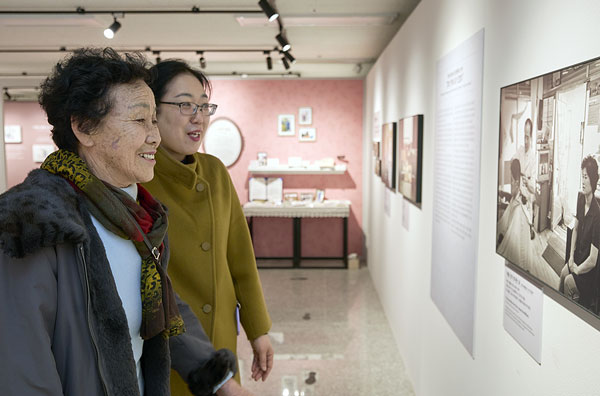

At the “Our Mother” Writing and Photo Exhibition held at the Seogwipo WMC Training Institute, stories of Jeju’s haenyeo are featured, drawing much attention. On January 7, about two weeks before the exhibition opened on January 22, a group of special guests visited the site. They were about 20 haenyeo from the fishing village association of Seongsan-eup, an area well known for Seongsan Ilchulbong. These women, known as “eomeong,” meaning “mothers,” are the “badang’s eomeong,” the mothers of the sea. Having spent their entire lives diving to support their families, they were also the very ones who had helped make the haenyeo photo exhibition possible.
Many of the elderly haenyeo, for whom this was their first time visiting an exhibition, gazed at the displays with bright, sparkling eyes, like children. The place that drew their attention most was, without a doubt, Zone B. This special space features photographs of Jeju haenyeo, their diving tools, and written works that portray their lives.
The exhibits are arranged around a bulteok, built by stacking black basalt stones. A bulteok is a traditional shelter where haenyeo would change clothes, warm themselves by the fire, drive away the cold, and rest between dives. The haenyeo smiled as they recognized their own faces and those of their fellow divers in the photographs. They looked fondly at familiar tools such as the muljeoksam and mulsojung-i, traditional diving garments worn before the use of rubber wetsuits, as well as the homeng-i and kkakkuri, hook-shaped tools used to gather seafood. They also spent time reading the stories of mothers who had quietly devoted themselves for many years to supporting their families. After taking in each part of the exhibition, they completed their visit with a sense of reflection.
We listened as they shared their lives—how, for as little as 30–40 years and for some, more than 70 years, they had worked in the sea to provide tuition and living expenses for their families.
“When I was young and just learning to dive, I could not even go properly into the water. My mother would cut seaweed and bring it up in a single breath. But I had such short breath and little strength that no matter how hard I kicked, I could not reach the bottom. It took me four tries just to bring something up. That is how I learned.”
“I also started diving when I was in elementary school. Once, I pushed myself too hard trying to gather more and nearly got into serious trouble. Even after all the adults had come up, I stayed underwater out of greed. When I finally surfaced after a long time, my head was spinning, and I collapsed.”
How did these girls, who should have been playing games like jumping rope and hide-and-seek until sunset, become haenyeo who braved the rough sea, risking their lives?

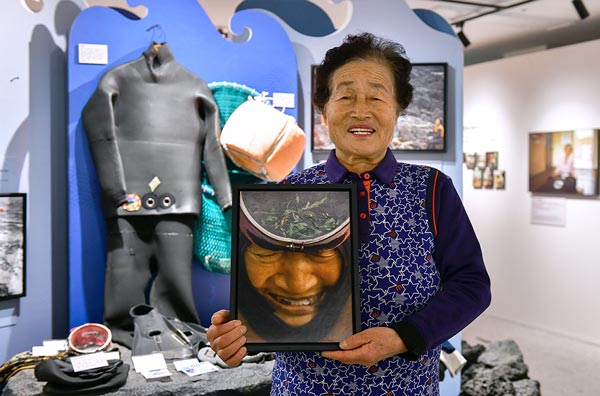

“Now we grow citrus and carrots, but back then, even if we farmed, it did not bring in much money. Even dried sweet potatoes were precious. Making a living was so difficult that we had no choice but to go out to the sea. And it was not just about gathering seafood. When we collected turban shells, we would boil them at home and carry them all the way to Seongsanpo to sell. There were no cars or motorcycles. We would walk for an hour at dawn without fear.”
“We had to pay school tuition, but our families were so poor that we often could not pay it on time. From a young age, we knew that if we were to survive, we had to gather something from the sea and sell it.”
They themselves did not know that the diving they began in this way would continue for nearly fifty years, or even longer. They only refrained from going out to sea when the waves were high. On such days, they worked in the fields instead. Throughout their lives, they were haenyeo, farmers, and mothers.
“My son was accepted into medical school. The tuition was expensive, so I worked even harder. In the winter, it was so cold and difficult that I felt as if my body would freeze, and I even thought I might die. But whenever I went into the water and caught something, I felt such joy. That was how I supported my family and paid the tuition. Without diving, I could not have lived like this. I have never once regretted being a haenyeo. Even though it was hard, I am proud.”
“Now my joints hurt, so it is not easy to go out, but as long as I am able, I still go into the water. And when I do, I never come out empty-handed. I do not have to rely on my children, and when my grandchildren call me ‘Grandma,’ I can give them a little pocket money.”


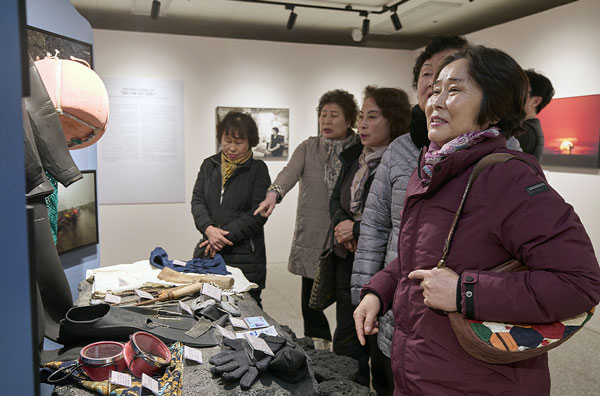
On the faces of the haenyeo, as they shared their life stories one by one, a quiet pride could be seen. They also expressed their gratitude to those who had captured their lives and efforts through the exhibition.
“In the past, haenyeo were often looked down on. But now, seeing people show such care and appreciation for us makes us so happy and gives us strength. We could never have imagined something like this before.”
“My parents passed away when I was two years old, so I grew up without knowing a parent’s love. But after coming to this exibition today, I thought, perhaps my parents loved me like this as well. It feels as though I was not the only one longing for them, and I cannot stop my tears.”
“I was not a fortunate person. My husband passed away when I was thirty-nine. All I knew was diving, so every day I went to the sea and returned at dusk, leaving my baby with my mother. Through those hardships, I raised my children, built a house, and bought fields. Being here today has brought back so many memories, and I keep finding myself in tears. My children tell me to stop diving now, and I had been thinking about it. But after sharing what was in my heart today, I feel at peace. I am also deeply grateful to the photographer who came to the seaside again and again to take our pictures.”
The whistling sound that Haenyeo make when they surface from diving is called sumbisori. For decades, on the boundary between life and death, they exhaled sumbisori and did not hesitate to endure hardship for their beloved families. We hope that these women, the heroes of their families and the pride of Jeju, will remain healthy and happy for a long time.
The whistling sound haenyeo make as they rise from the sea is called sumbisori. For decades, standing on the boundary between life and death, they exhaled this breath and endured hardship without hesitation for the sake of their families. We sincerely hope that these women, the heroes of their families and the pride of Jeju, will remain healthy and happy for many years to come.