The Proper Way to Breathe
Scuba diving is an activity in which divers wear underwater breathing equipment and enter the water to observe marine ecosystems. One of its most important safety rules is never to hold one’s breath. The deeper a diver descends, the greater the water pressure becomes, causing the volume of air to decrease.1 This places pressure on air-filled parts of the body, such as the ears and lungs. Holding one’s breath can interfere with the regulation of internal pressure and put one’s life at risk. Divers must therefore continue breathing deeply and steadily to equalize the pressure. When ascending to the surface, they must also breathe continuously and rise slowly to minimize the harmful effects of changes in pressure.
1. This is explained by Boyle’s law, which states that at a constant temperature, the volume of a gas is inversely proportional to its pressure. In other words, as pressure increases, the volume of a gas decreases; as pressure decreases, its volume increases.
Breathing is an involuntary reflex regulated by the medulla oblongata and normally occurs automatically, without conscious effort. At times, however, we deliberately control our breathing to calm anxiety and tension or to give strength to our voice and movements. In activities such as scuba diving, the way one breathes is directly connected to survival. During exercise, when and how we breathe can help prevent injury and improve performance. Proper breathing is both a skill and an essential element of safety—not only for broadcasters, voice actors, and singers, who rely directly on their voices, but also for dancers, instrumentalists, firefighters, and pilots.
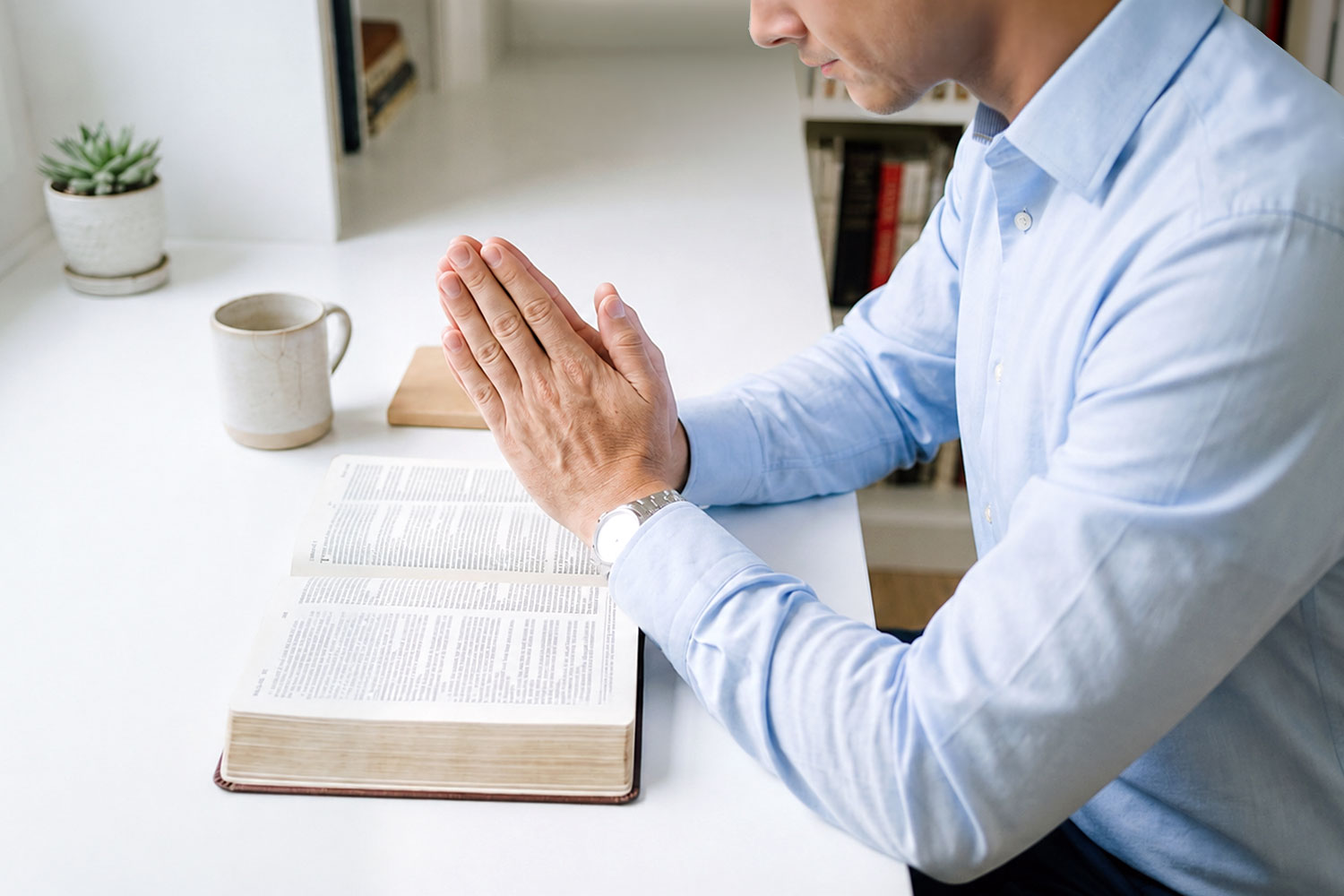
Prayer is the breath of the soul. In our life of faith, too, there is a proper way to breathe. God instructed us to pray continually and without ceasing (1 Th 5:17–18). Even as we diligently run the path of faith, let us examine whether we have neglected the breathing of our souls and whether we are breathing properly. God listens not to prayers offered merely out of habit or formality, but to those offered in spirit and in truth (Jn 4:23–24), and to humble, contrite prayers in which we lower ourselves before Him (Ps 10:17; 51:17).
Throughout the Bible, we find many instances in which God’s work was accomplished through prayer. Moses connected God and the Israelites through prayer. Daniel refused to stop praying to God even when his life was threatened and was protected in the lions’ den. As soon as Solomon ascended the throne, he prayed for wisdom to govern the people and received abundant blessings. Jesus also set the example of praying from early morning, showing us that God’s power is revealed through prayer.
Let us never stop the breathing of our souls—not only when we encounter difficulties, feel overwhelmed by each passing day, or struggle under the pressures of life, but also when all is peaceful. Just as learning to breathe properly enables us to run longer, the prayers we offer day after day cultivate the humility to examine ourselves, the faith to believe that God will help us, and the strength to overcome spiritual battles. In this way, prayer breathes new life into our souls.


